A pain appointment is short, and the questions come fast: how often, how long, how strong, what have you tried. Answering them from memory in a few minutes is hard for anyone, and harder on a day with pain. People who feel they were not heard often say the same thing afterwards: I forgot half of it. This checklist puts the answers on paper before you go.
The week before: turn the diary into a few numbers
If you keep a diary, do not plan to hand it over whole. Read it yourself and count, for the last one to three months:
- how many days with pain in a month
- the usual strength, and the strongest
- the usual length
- where it usually is
- how many days you took a painkiller
- what you tried, and how often it helped
- what was most often noted before it started
- days of work or school missed
Then compare with the time before: more, fewer or the same? These few lines are what the appointment will turn on. If you have no diary yet, start one today; even one week of dated entries is better than none. How to keep a pain diary shows the quickest way.
The checklist
- The summary on one page, two copies.
- Your medicine list. Everything you take, with the dose and how often, including what you buy without a prescription. Or bring the boxes.
- The list of what you have tried, with how each went.
- Earlier reports and letters, if this doctor does not have them.
- Your questions, written down. Two or three, the most important first.
- The diary itself, in case the doctor asks about a certain day.
- Something to write with, or a person who takes notes.
In the room
- Hand over the page first. Say: "I have written down the last three months, may I give you this?" It sets the facts before the talk starts.
- Say what the pain stops you doing. It is the part that is easiest to leave out and hardest to wave away.
- Ask your first question early. Do not keep it for the door.
- Repeat the plan back. "So I take this for four weeks, keep the diary, and come back in January?"
- Ask what to do on a bad day, and when to seek help sooner.
Afterwards
Write down the same day what was agreed, and mark the start of anything new in your diary. Then the next summary can show what changed after it, which is the question the next appointment will open with.
How Pain Tracker does it
The counting in the first section is what the doctor summary in Pain Tracker, the Family Health app, does for you: headache days, average strength and length, the usual place, what was ticked most often before, painkiller days and how often relief followed, for 7 days, 30 days or 3 months, with your medicines and readings on the same page. The appointment itself goes in the family calendar, with a note of who is going along.
Coming in version 2.0. The screens below are from version 2.0, which is on its way to the App Store. Update the app once it appears.
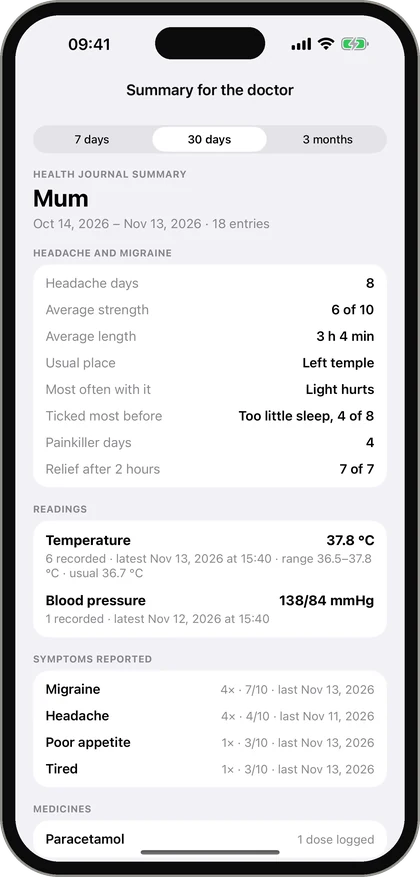
Seeing someone for the first time? Your pain history on one page covers the longer story. Pain Tracker keeps a record and does not diagnose.
Questions people ask
What should I bring to a pain management appointment?
A one-page summary of the last one to three months, your medicine list, a list of what you have tried, earlier test reports and letters, your questions in writing, and your diary in case of questions.
How do I prepare for a first pain appointment?
A week before, count your pain days, the usual strength and length, and your painkiller days from your diary. Write down how the pain started, what you have tried and the two questions you most want answered.
What questions should I ask at a pain appointment?
Ask what the doctor thinks is going on, what the next step is and why, what you should watch for, what to do on a bad day, and when you should come back.
Should I take someone with me?
If you can, yes. A second person hears things you miss, can take notes, and can say how the pain looks from the outside.
This article is general information about keeping a record. It is not medical advice and does not replace your doctor. If your pain is new, sudden, severe or changing, see a doctor; in an emergency call your local emergency number.